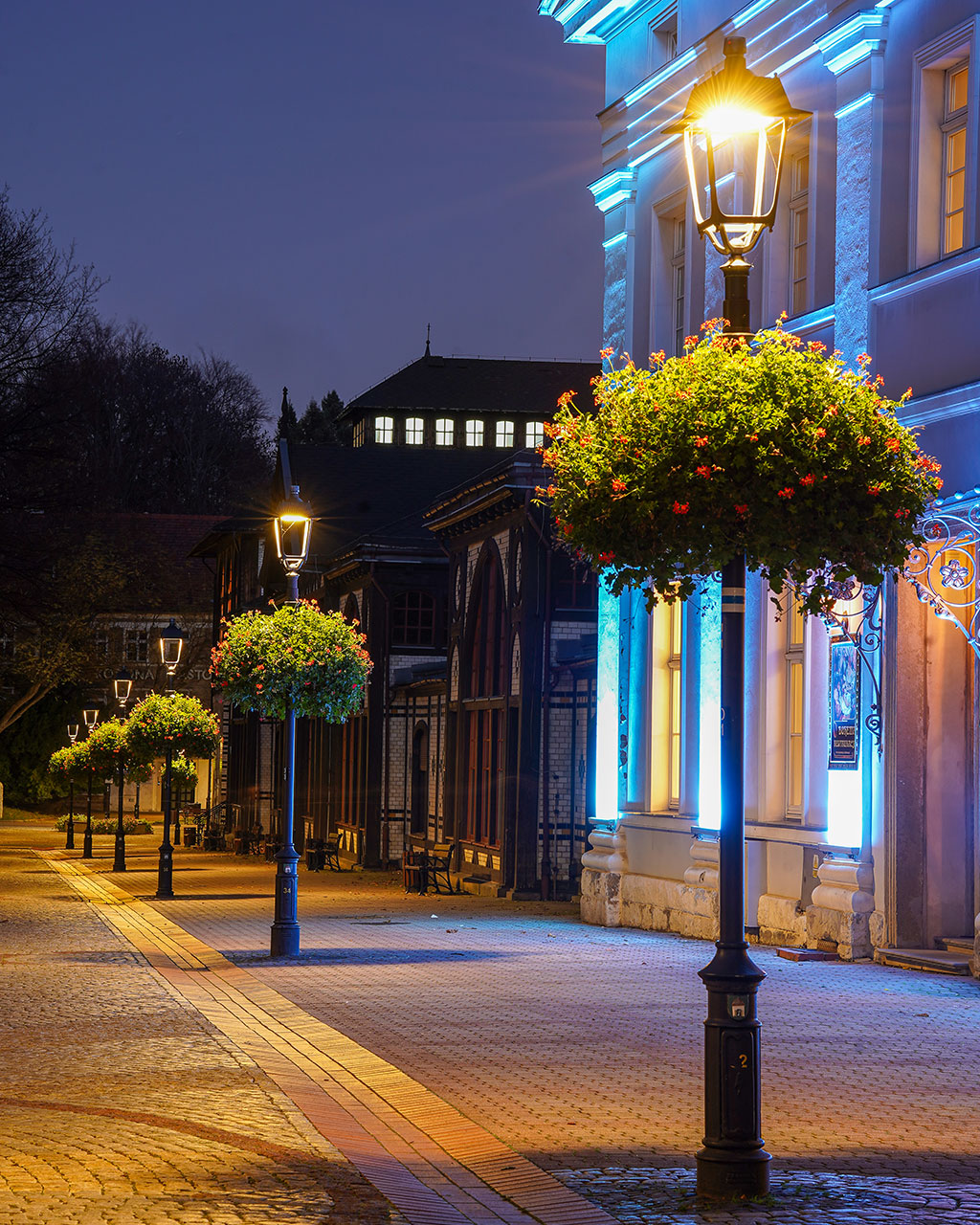
Szczawno-Zdrój lighting upgrade
Connected-ready lighting enables the town to reduce energy costs and embrace smart city initiatives in the future


Szczawno-Zdrój is a charming spa town in the Central Sudetes that welcomes tourists all year long. The local authorities have a strong urban development plan to preserve its infrastructure and ensure a sustainable future without compromising the town’s unique heritage. In 2020, they initiated a plan to upgrade the town’s public lighting to more modern technology while enhancing the town’s character.
New lighting for smart energy management
The town was lit by fixtures equipped with traditional high-pressure sodium lamps that were no longer providing an adequate level of lighting and were inefficient. The council wanted to switch to more energy-efficient LED technology that would achieve four key goals:
- improve the quality of light and visibility;
- reduce energy consumption;
- lower its carbon footprint;
- enhance and preserve the town’s heritage.
Modern technology in a traditional design
The council opted for a range of high-performing, energy-efficient LED luminaires, including the ALBANY, VALENTINO and FLEXIA TOP. With their classic designs, they perfectly integrate the town, enhancing its historic architecture and character and heritage, especially in the Henryk Wieniawski Spa Park.
Customer
Szczawno-Zdrój Council
Application(s)
240
ALBANY
165
FLEXIA TOP
148
VALENTINO
They deliver a high quality of light to improve visibility and the feeling of safety and security for both residents and visitors.
Connected-ready for smart city initiatives
Forward-thinking, the local authorities requested that all of the luminaires be fitted with Owlet IV nodes. This ensures that the entire infrastructure is connected-ready, enabling it to be remotely managed via an IoT platform in the near future.
With this scalable lighting infrastructure in place, the town can easily move forward with flexible dimming schedules and real-time fault detection to maximise energy savings and operational efficiency. The system’s open architecture allows for seamless integration with other smart city applications, such as environmental sensors or traffic monitoring. This public lighting upgrade is the first step in building a truly sustainable and smart town.